Bulk, Cut, or Maintain? When to Do Each (And Why It Matters)
- KanulLift.com
- Apr 25
- 3 min read
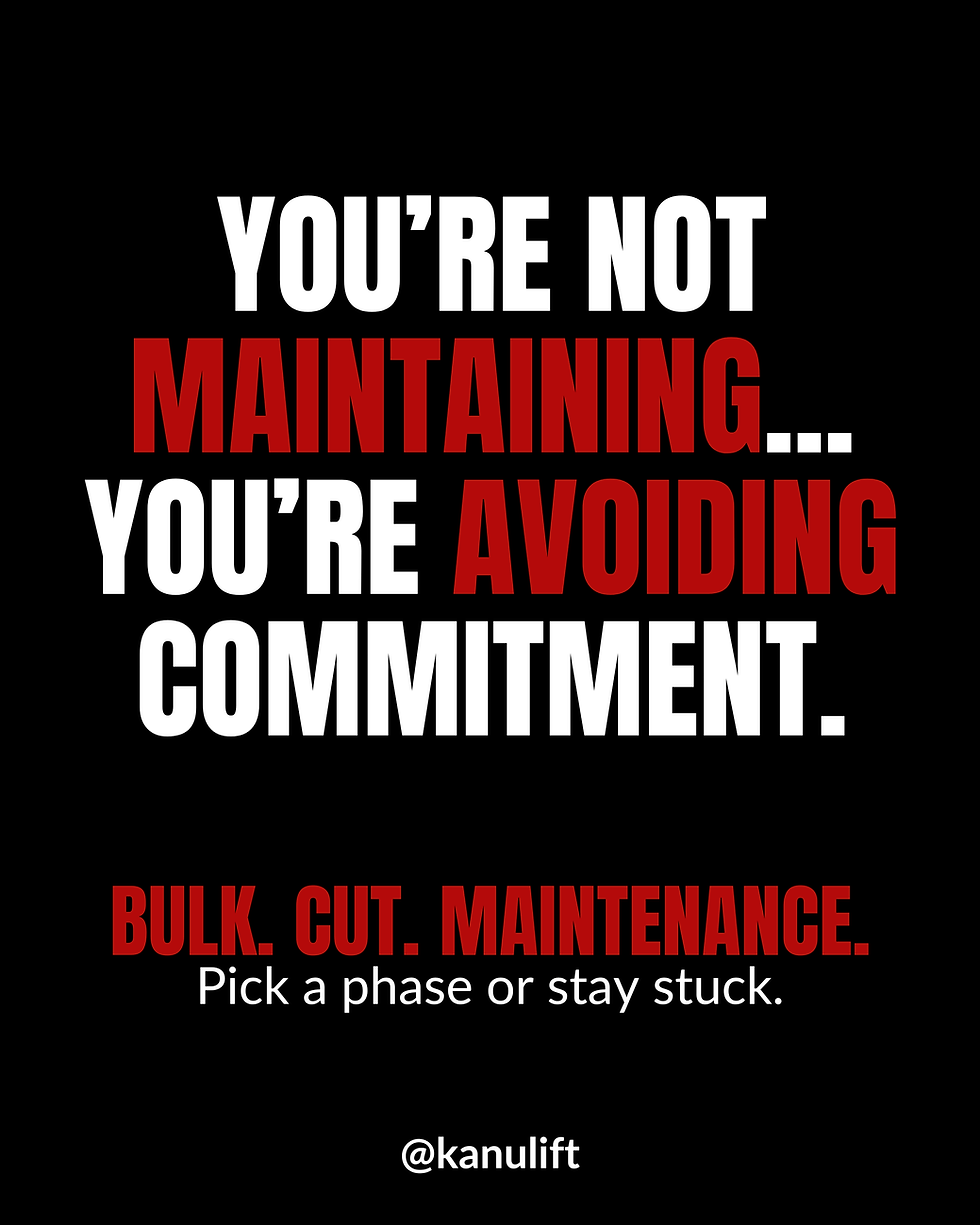
Most people don’t struggle because they’re not working hard.They struggle because they’re in the wrong phase.
You can’t build muscle effectively in a true deficit. You can’t lose fat efficiently in a surplus. And maintaining without a clear goal usually leads to spinning your wheels.
Progress depends on aligning your nutrition phase with your goal.
Bulking: When the Goal Is Growth
A bulk is a controlled calorie surplus designed to support muscle growth.
This is where you have the most potential to build size and improve strength. Training performance typically increases, recovery is better, and you’re able to push progression more consistently.
But more food isn’t always better.
A poorly executed bulk leads to unnecessary fat gain, which eventually makes cutting harder and longer. The goal isn’t to gain weight as fast as possible. Off-season and bulking is to create an environment where muscle growth is prioritized without excessive fat accumulation.
Cutting: When the Goal Is Fat Loss
A cut is a calorie deficit focused on reducing body fat while maintaining as much muscle as possible.
This phase requires more precision. Training needs to be structured to preserve strength, and recovery becomes more limited. Progress isn’t measured by performance increases as much as it is by maintaining performance while body weight drops.
A lot of people lose a bit of muscle mass during a cut because training intensity drops or the deficit is too aggressive.
A good cut keeps as much muscle as possible while gradually reducing fat.
Maintenance: The Most Underrated Phase
Maintenance is where you hold your body weight steady.
This phase is often overlooked, but it’s one of the most valuable. It allows your body to stabilize after a bulk or cut, improves recovery, and gives you time to focus on performance without the stress of pushing calories up or down.
It’s also where you can refine your physique and build consistency without extreme changes.
Maintenance isn’t a lack of progress. It’s a strategic pause that supports long-term results.
When to Switch Phases: Bulk, Cut or Maintain?
Switching phases isn’t random. It’s based on progress, not emotion.
If a bulk leads to excessive fat gain, it’s time to pull back. If a cut starts impacting performance too heavily, adjustments need to be made. If you’ve been pushing in one direction for too long, your body eventually needs a reset.
Most mistakes happen when people switch too often or not at all.
Consistency within a phase is what drives results. Constantly jumping between goals prevents meaningful progress in any direction.
Why Phase Alignment Matters
Training and nutrition have to work together.
If your goal is muscle growth but your calories don’t support it, progress stalls. If your goal is fat loss but your training isn’t structured to maintain muscle, you lose more than you should.
Everything has to be aligned.
This is what allows progress to feel consistent instead of frustrating.
Stop Guessing Your Approach
Bulking, cutting, and maintaining all have a purpose. The key is knowing when to use each one and how to execute it correctly.
If you’re unsure which phase you should be in, or your progress isn’t matching your effort, it’s time to take a more structured approach.
If you want a clear plan based on your current physique and goals, click here to schedule a consultation.


